 Click to enlarge
Free Fall Experiment Set SK021
Ask About This ProductDescription
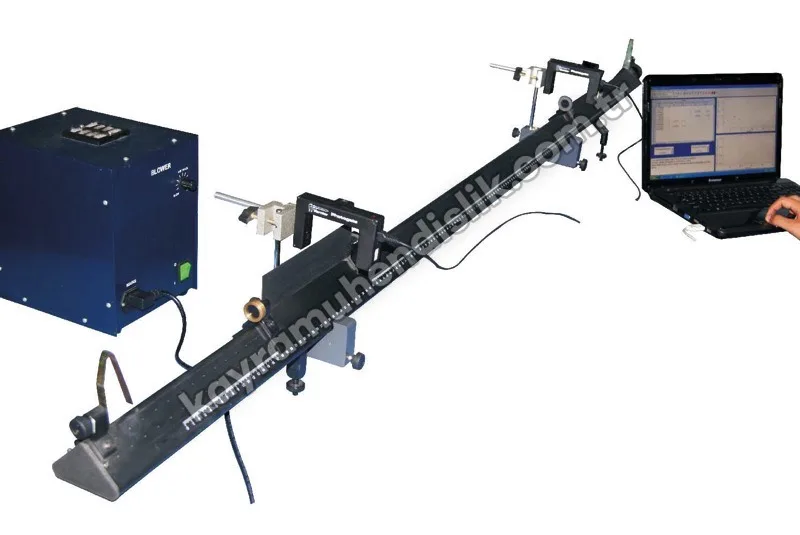
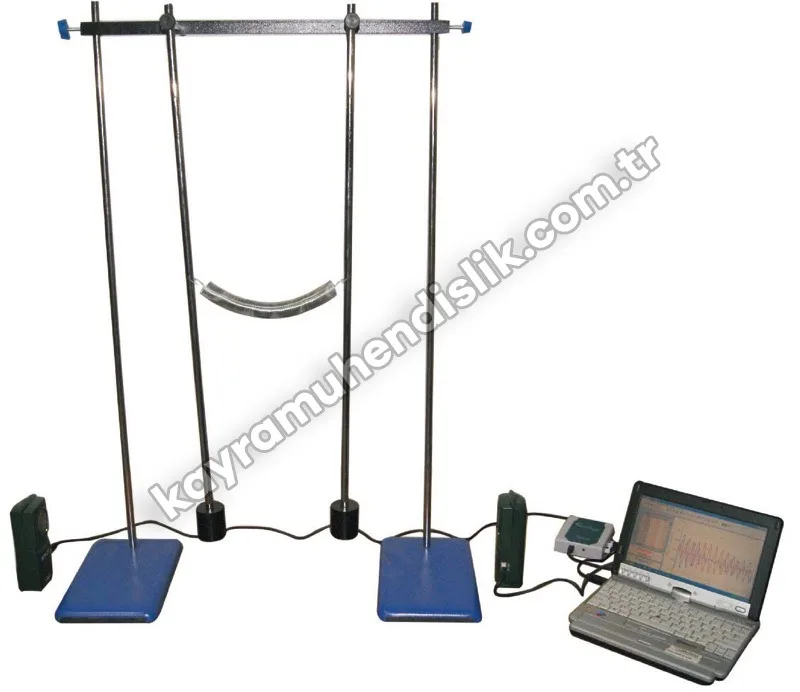
With the free fall experiment set, the gravitational acceleration 'g' is calculated by observing free-fall motion. The set also aims to study the accelerated motion of objects under gravity and to prove that there is a force that moves objects towards the centre of the Earth.
Experiments that can be carried out:
Experiment 1) Calculating 'g' using a pendulum
Experiment 2) Calculating 'g' using a helical coil
Experiment 3) Calculating 'g' using the two-section apparatus
Experiment 4) Calculating 'g' using the ten-section apparatus
Working Principle:
All objects, when released, fall with a constant linear acceleration. The magnitude of this acceleration is 9.8 m/s2 and it is denoted by g. This is called free fall. The force that causes free fall is gravity. The time it takes objects to fall and their speed vary with their weight and cross-section, because air friction also acts on the object, with a different magnitude depending on its cross-section and weight. When separate calculations are made with this set for objects released in different ways, approximately the same values are found for 'g'. This shows that 'g' is constant.
Experiment Set Contents:
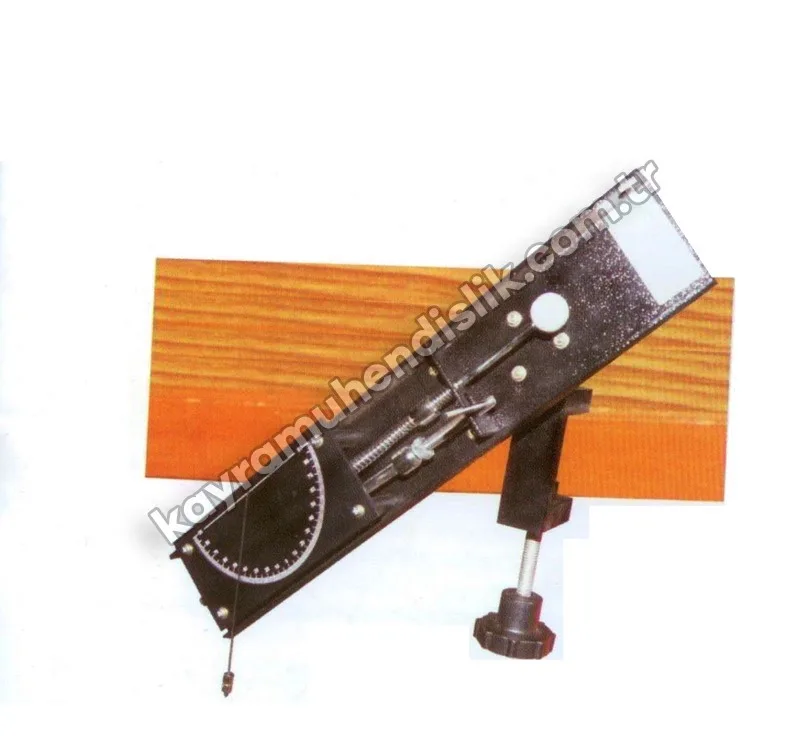
1) Free fall apparatus
2) Digital chronometer (this hand-held chronometer also works as a data logger and stores the data it collects in its memory. It is often used in other experiments too, and the data can be transferred to a computer via USB.)
3) Light gate (2 pcs)
4) Red cable (200 cm)
5) Black cable (200 cm)
6) Two-section drop apparatus
7) Ten-section drop apparatus
8) Metal ball
9) Brass pendulum bob
10) Iron pendulum bob
11) Helical spring
12) Pendulum holder (2 pcs)
13) Grooved pulley
Delivery and Installation
Before shipment, our products are inspected and packed in special impact-resistant packaging, and are delivered safely to every province of Türkiye.
Installation: In laboratory and classroom projects, installation and commissioning after delivery are carried out by our expert team.
Training and support: User training and after-sales technical support are provided for experiment sets and simulators.