






Educational Robots - Robot Systems and Robotics Laboratories - Robotics Classroom - Robotics Workshop
A robot is an electro-mechanical device that can carry out autonomous or pre-programmed tasks. Robots can work under the direct control of an operator or independently under the control of a computer program. Although the word brings to mind human-like machines, very few robots resemble humans.
A robot is a device that perceives its environment with its sensors, interprets what it perceives, makes a decision as a result (artificial intelligence), behaves according to that decision and starts or stops its moving parts. According to this definition, a car connected to a computer by a parallel port and controlled from the keyboard is not a robot, because it does not decide on its own but applies the instructions given from the keyboard. If the same car uses the computer's microprocessor to interpret what its sensors perceive, can decide for itself and act independently of us according to its perceptions, it is then a robot.
Today the largest area of use for robots is industrial production. They are used especially in many fields such as automotive, medical, security, education and defence: for assembly in automotive, as assistants in precision surgery in the medical sector, during bomb disposal in security, and for bombing and as early warning systems in the form of unmanned aerial vehicles in defence.
The use of robots at home is steadily increasing. The first robots to enter homes were toys such as Furby and AIBO. Robots that help with housework are becoming increasingly common, especially in the USA. Robot vacuum cleaners that sweep floors by themselves are in great demand.
Learning System
- The user's ability to recognise and learn a new object should be taken into account in the progress time; there is thus no difficulty in learning and advancing is much easier. With this learning system, it is possible to obtain maximum efficiency from the user in minimum time.
- By preparing various robot projects and giving users a week of design time, it is possible to nurture their creativity and active attitude.
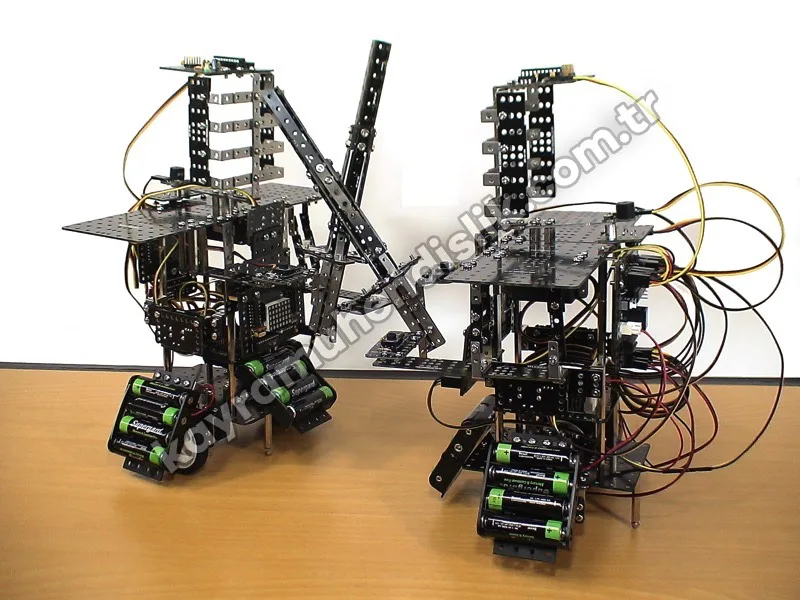
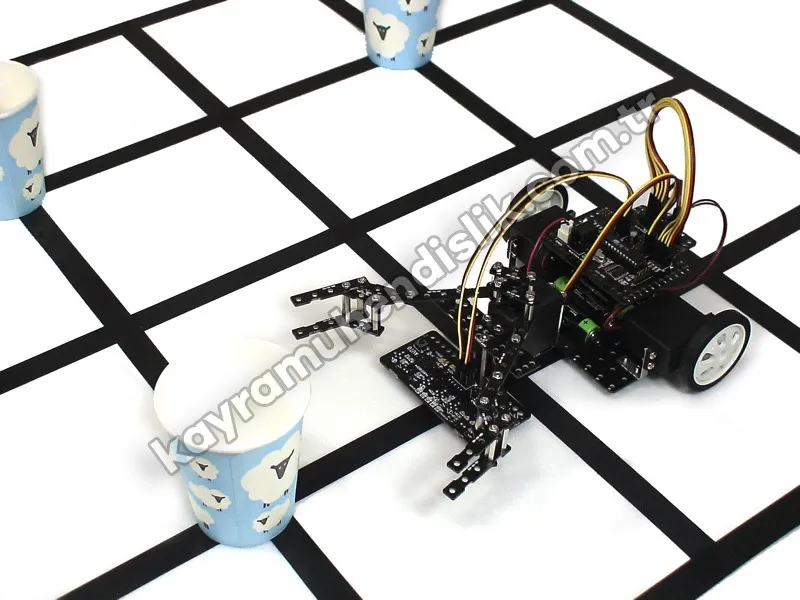
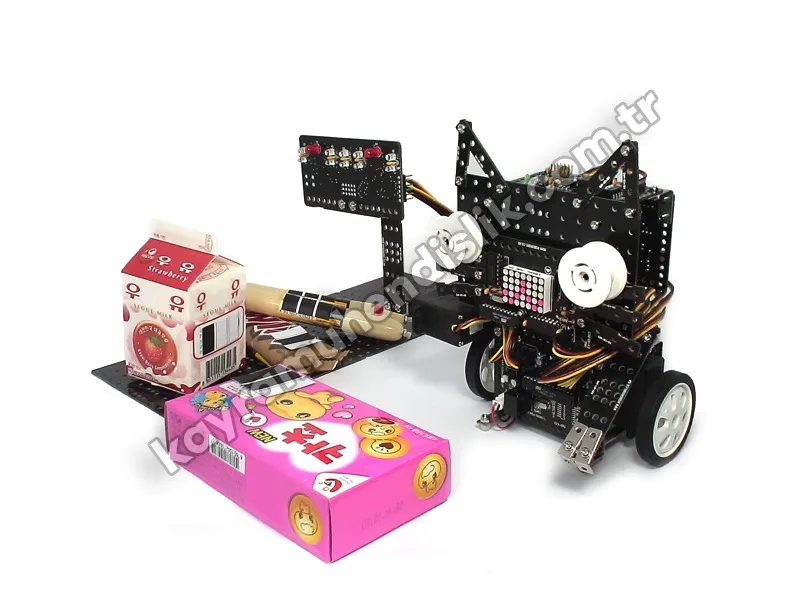
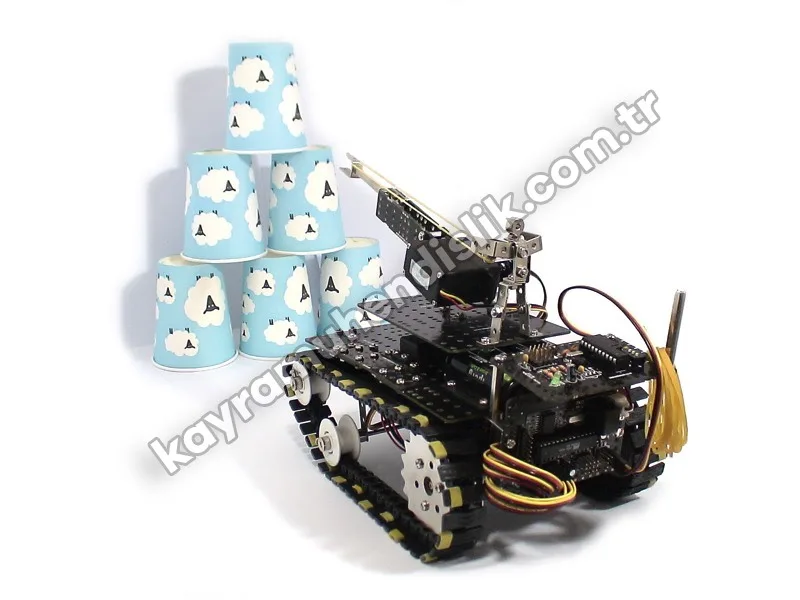
RoboKit
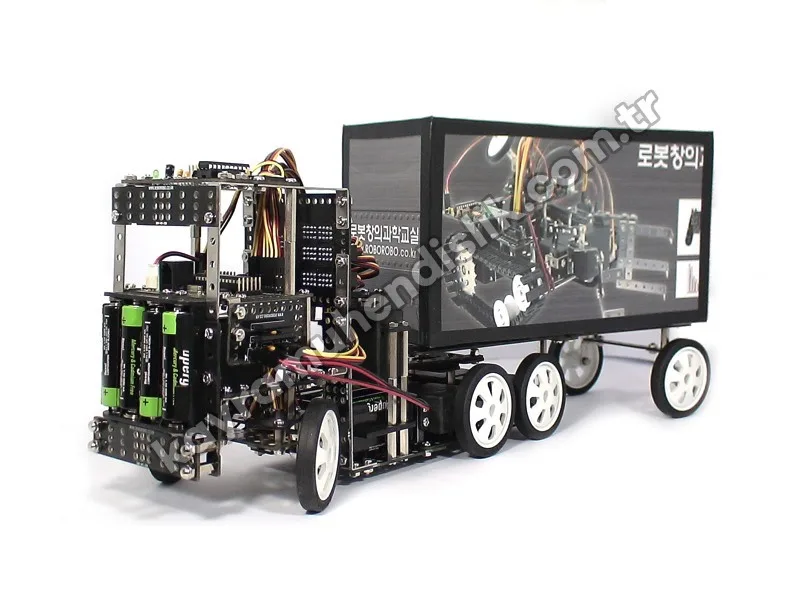
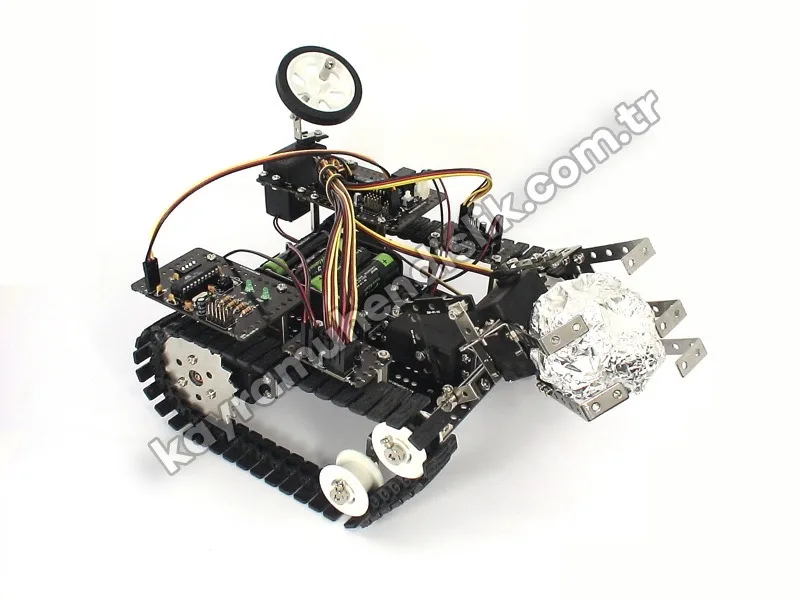
The RoboKit series consists of 5 separate packages, which you can browse in the products below.
Simple and Fun Programming
The GUI (Graphical User Interface) offers the user a fun and very simple programming opportunity.
Flow Concept Programming
The program allows the robot algorithm to be structured simply and visually, and provides great help in the development of basic mathematics and visual intelligence.
Complex Algorithm Function
Depending on the user, the programming function can take on a complex structure, making it possible to create robots with more advanced functions that can carry out many tasks. For these complex programming moves (while, if, break, loop, etc.), the user must have developed their skills and learned the program.